Runify: from client brief to six-figure acquisition in 45 days
A founder contracted Buzzed to turn a gamified running concept into a market-ready iOS product. Using the product and infrastructure frameworks we had already built internally, we went from kickoff to App Store in 14 days — and to a signed acquisition LOI by day 45.
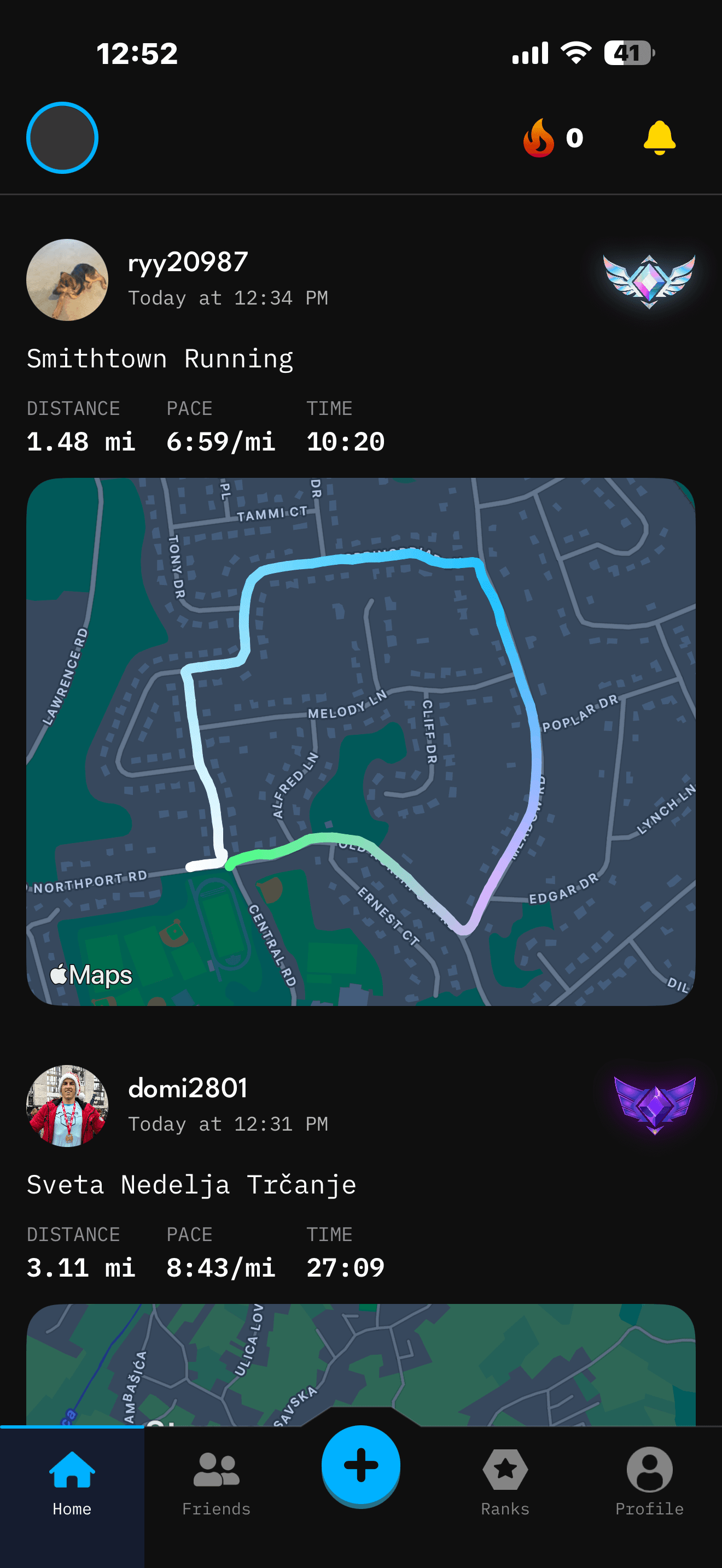
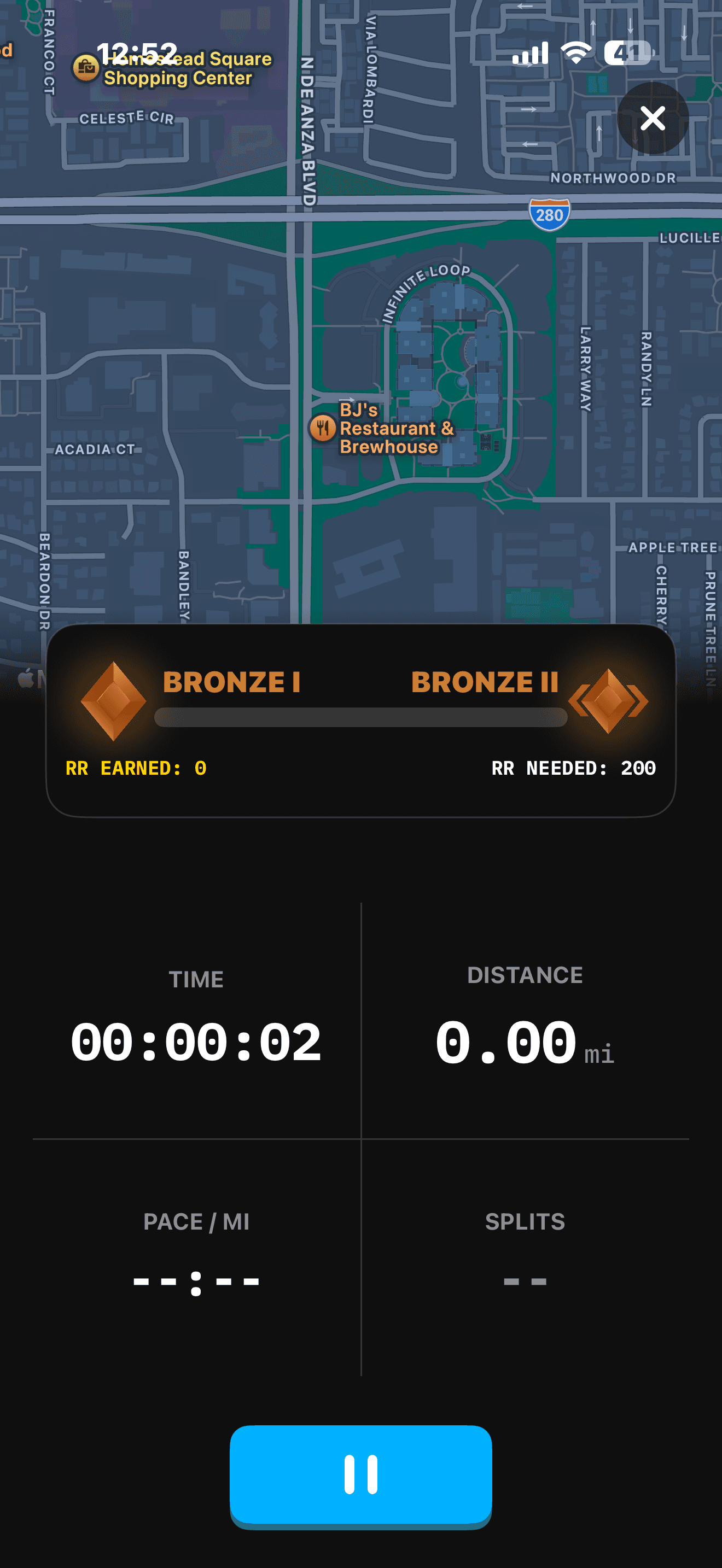
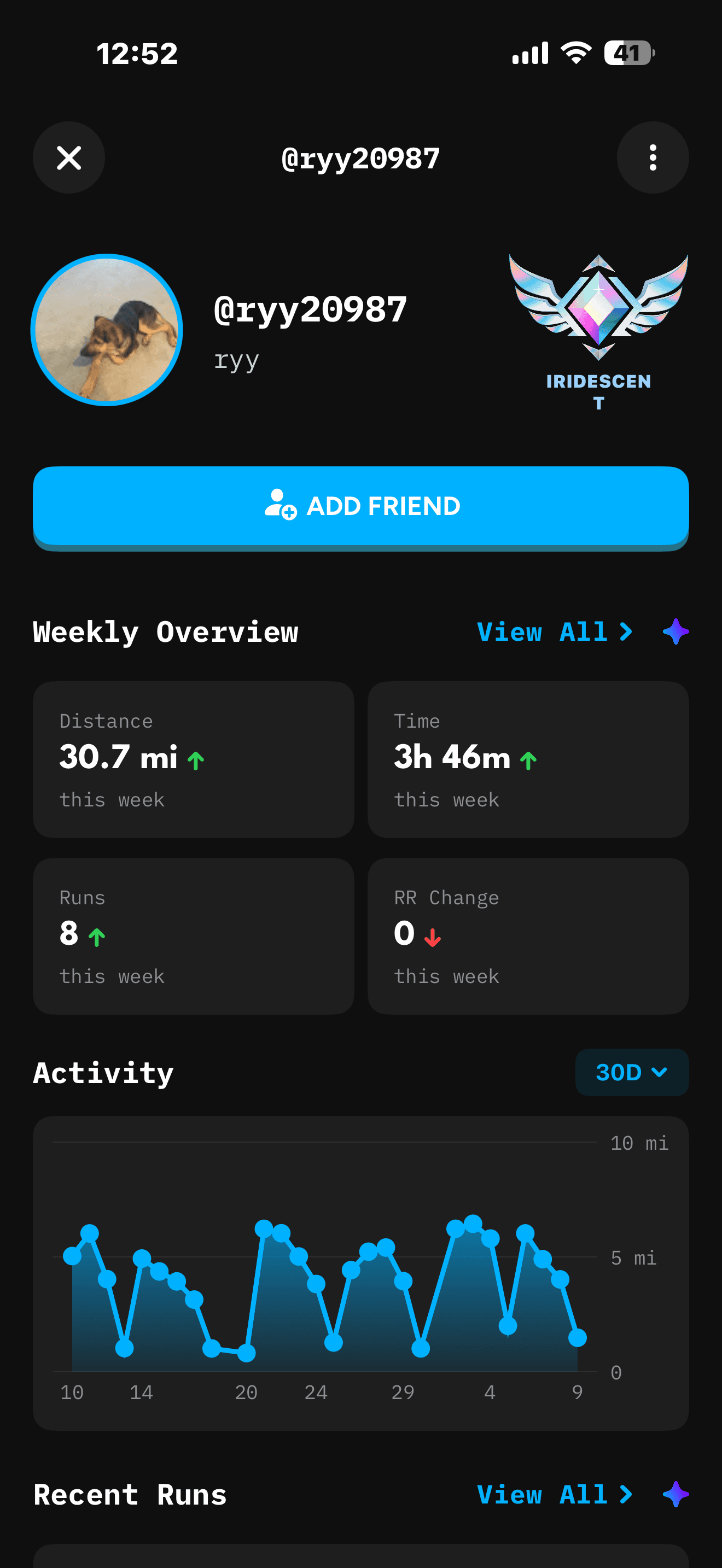
A founder came to Buzzed with a product thesis: running could feel more like a game. XP, rank tiers, leaderboards, streaks, and shareable progress could give runners a reason to come back after the GPS route ended. They contracted us to turn that thesis into the product — from design and engineering through App Store release.
The category was already crowded. Strava existed. Apple Workouts existed. Winning did not mean building every feature a mature fitness platform had accumulated. It meant identifying the one loop that made Runify different, making it feel polished, and getting it into users' hands while the opportunity was still open.
The assignment was bigger than an MVP.
The client did not hire Buzzed for a prototype or a stack of design files. They needed a real product that could pass App Review, track live runs, retain users, support growth, and stand up to technical due diligence if the idea attracted interest. The deadline made that harder: a normal six-month agency cycle would have missed the summer running season and consumed the window before the market could respond.
The brief was not “build an app quickly.” It was “build the smallest complete product that can become a business.”
We did not start from an empty repository.
Runify moved quickly because Buzzed had already invested in the parts of product development every serious app needs but no client should have to fund from scratch. Our internal frameworks covered analytics, crash reporting, push notifications, deployment, automated QA, App Store monitoring, and data integrations. We configured those rails for Runify, then concentrated the engagement on the product decisions that were unique to the client.
That distinction matters. A template copies the visible product. A framework removes repeated infrastructure work underneath it. Runify's experience, progression system, visual language, and growth loop were designed for Runify; the dependable machinery around them came from the way Buzzed already builds.
Owned infrastructure
Eight systems, zero vendor dependencies.
Telemetry, QA, pushes, pipelines: every layer shipped as source, not SaaS invoices.
Analytics
Full event pipeline. Skipped Amplitude, Firebase & Mixpanel entirely.
Crash Reporting
Crash detection & stack traces. No Sentry, Instabug, or Bugsnag.
Notifications
Custom push layer. No OneSignal, Braze, or third-party delivery fees.
Data Connectors
Own sync framework for Strava, Garmin & HealthKit. No metered API bills.
Cross-Platform
In-house framework ships to iOS & Android from one codebase
Automated QA
Auto bug detection, reporting & test suite runs on every commit.
App Review Monitor
Tracks App Store reviews & sentiment in real time. No Appfollow or Appbot.
Deploy Pipeline
Internal tooling handles builds, signing & App Store releases automatically
Design and engineering ran as one stream.
There was no long handoff from strategy to wireframes to engineering. We defined the core loop, designed the screens, implemented them, and tested the product in parallel. Decisions were made against working software: start a run, finish it, earn XP, move through a rank, share the result, and come back to protect a streak.
Architecture
Three rules a vendor would have decided for us
What earns points per run
How runners progress
- Bronze I0
- Bronze III200
- Silver1.2k
- Gold4.8k
- Diamond20k
- Iridescent50k+
When a card auto-fires
- Personal record
- Rank up
- Streak hit
- Route completed
Everything that did not strengthen that loop was pushed out of the launch scope. Everything required to make the loop trustworthy — live tracking, progression rules, social proof, notifications, quality monitoring, and release automation — stayed in. That is how a two-week build remained a production product instead of becoming a fast demo.
Ownership kept speed from becoming technical debt.
The easy way to hit the deadline would have been to rent the product from a stack of metered vendors: tracking, leaderboards, gamification, maps, analytics, notifications, and retention. That would have made the first demo fast, but it would also have made every new user more expensive and left the buyer inheriting a web of dependencies.
We built the differentiating loop as owned software. Run tracking, XP progression, rank logic, streaks, leaderboards, and social sharing all lived in the product Buzzed delivered. The client controlled what counted, how runners progressed, and how the economics behaved as usage grew.
Shipping quickly created the opportunity. Owning the system made the opportunity valuable.
Modeled monthly operating cost
Vendor pricing scales with every user. Self-hosted infra doesn't.
The delivery system produced a business outcome.
Runify went live on the App Store 14 days after kickoff. By day 28 it had reached 1,000 active users. Growth loops were running by day 30. On day 45, the client signed an LOI for a six-figure acquisition.
Contracted build timeline
Client brief to signed LOI in 45 days.
The acquisition was not the result of one clever screen. It was the combined value of timing, traction, product quality, and a codebase the buyer could actually own. Runify is proof of the advantage Buzzed was built to create: reuse the infrastructure we know, keep the product itself bespoke, collapse the distance between design and engineering, and ship early enough for the market to do something meaningful with the result.
Have a product window that will not wait six months?
Buzzed turns a focused brief into owned, production-grade software using a delivery system built to move from design to launch in weeks.